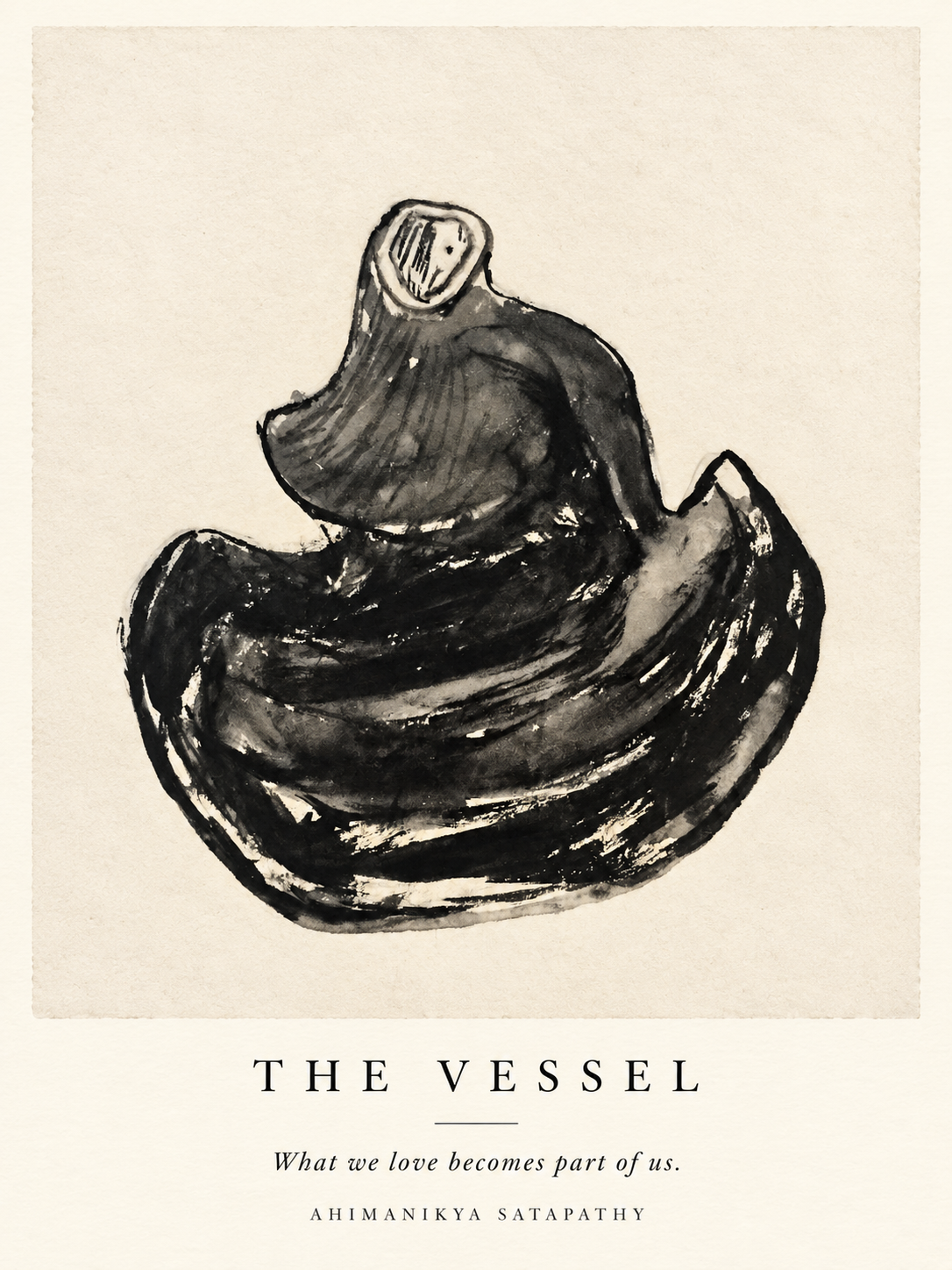
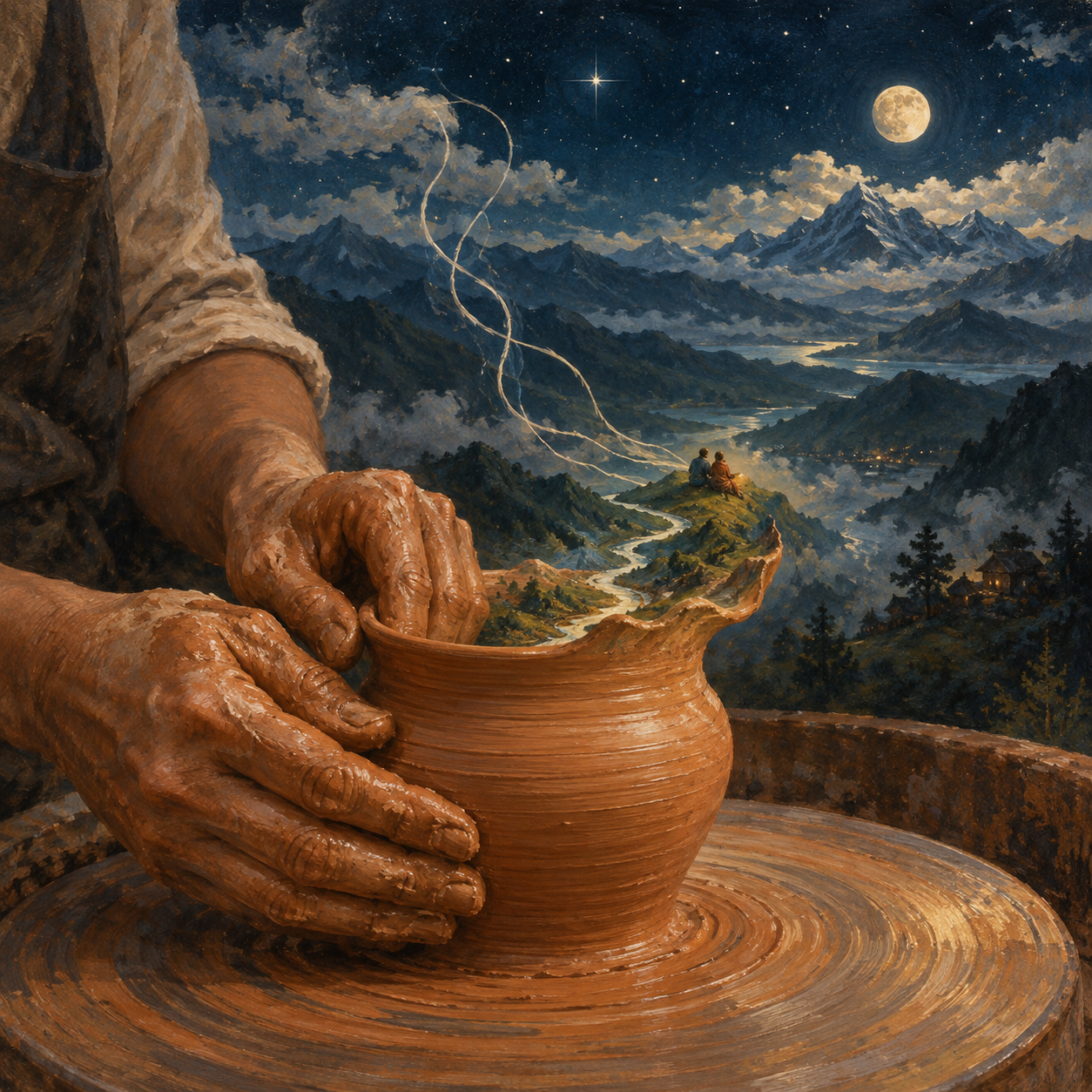
Song arrangement · Read the original poem ↗
Why this musical direction
The author’s voice is the centre of the collection. Keep the tenderness of the preferred acoustic take; use regional melodic inflection as a colour, without turning this free verse into a formal Odissi composition.
The shared feeling is calm, soulful joy: affection, wonder and the freedom to dream. Local vocal phrasing and melody lead the arrangement. Rhythm and instrumentation can vary with the chosen setting while the pace remains unhurried.
Arrangement decisions and review
Status — musical intention with a listening reference. A recording is available above. These notes describe the intended choices; a prompt does not establish what was actually sung or played. Keep the author-selected take as the reference and identify any proposed change separately.
Vocal choice — solo by default. One lead keeps the poem’s first-person voice and long thoughts connected. Any second voice, shared refrain or harmony suggested in the arrangement notes is an optional variation to discuss with the author before generation; it is not required by the language. The author selected a playful duet as an additional version; the solo remains the default. Earlier unselected duet trials remain production references.
What to validate. Let whole Odia thoughts shape the melody; use brief Odissi-informed turns without fragmenting words. Check whether the cited context supports the chosen influence and whether the musical choices serve the poem. Distinguish a documented practice from our new arrangement. Suggest corrections with the local variety, a source or performance example, and a timestamp when reviewing audio.
The optional duet trial of 27 September keeps the Odia direction above: brief Odissi-informed turns after complete phrases, flute responses and restrained mardala. The second voice answers the mountain-and-moon invitation, then joins the final weaving of dreams. That is a contemporary interpretation of this poem, not a claim that Odia lyric song requires a duet. These are new text-prompt candidates, not covers of the published recording. Before selecting an additional Duet version, check the male voice leads through the first chorus, the female replies stay gentle, every word remains clear, and both the gathering breath and potter pause survive. The original recording remains available.
Earlier duet — archived. At the author’s request, a new variation brings soft female replies into the male-led opening and verses, gives the mountain-and-moon invitation to a female solo, and reunites both voices in the closing refrain. The vocal arrangement follows the selected Bhojpuri duet; the Odia diction, brief Odissi-informed turns, flute replies and restrained mardala remain this version’s own direction. The intended playfulness comes from affectionate conversational exchanges at the existing unhurried pace. It is a contemporary creative choice, not a claim about a required Odia tradition. The author selected Take 1, preserved among earlier recordings after the author selected the newer Playful version. Detailed review remains welcome: check that the female part is audible early, replies do not obscure words, the two pauses survive, and the mood is joyful without becoming hurried. The existing solo remains available and is the default.
Playful duet retry — awaiting selection. A further reference-based cover trial uses the selected Odia duet as its musical starting point. Its unchanged sung words and Odia musical direction are paired with more distinct female replies after complete male phrases, a female invitation verse, and a shared ending. The aim is affectionate playfulness through expression while retaining a calm pace. A cover may change the melody or backing; these remain trial intentions until heard. Compare whether each voice has space, complete words remain clear, and joy feels natural rather than hurried. Neither candidate replaces the published solo or duet. Exact inputs, verified controls and candidate links are recorded in production/i-am-free-to-dream/odia-playful-retry-2026-09-28/run.json.
Conversational duet study — not selected. The author found that this approach did not work and requested a trial using the selected Bhojpuri or Sambalpuri tune. A further author-requested trial draws on published dialogue structures in Akshaya Mohanty songs: Khoka Bhai Geeta alternates narration and conversation, while the transcribed opening of Kabata Kholila Priye uses questions and replies. These are textual observations, not a direct listening analysis; the latter page’s English interpretation is unreliable and was not used. Saregama’s Alo Mani release provides an upbeat reference, without verified instrumental details here. Our creative application keeps every sung word: the male sings the first gathering phrase, the female answers the second, he completes the potter stanza alone, she leads the invitation, and both join at the end. The prompt asks for affectionate confidence and relaxed rhythmic lift with the existing Odia instrumentation and melodic direction. It uses the selected project duet as its audio reference, not a third-party recording. Review whether the exchange happens naturally, the pauses survive and the ending feels joyful. Exact inputs and candidates are recorded in production/i-am-free-to-dream/odia-conversational-duet-2026-09-28/run.json; existing published versions remain unchanged.
Author-selected Playful variation — Bhojpuri reference. This author-requested cross-language cover uses the selected Bhojpuri Playful recording to guide the melody, rhythmic feel and vocal exchanges. For this experiment, its Purabi-inspired dholak, sarangi and harmonium direction replaces the usual Odia ensemble, while every Odia sung word and the gathering and potter pauses remain. Male-led phrases, affectionate female answers, a female invitation verse and a shared ending follow the source arrangement. This is a deliberate contemporary crossover, not a description of traditional Odia music. Review how closely the tune survives, whether Odia syllables fit naturally and whether the duet feels playful without rushing. The author selected Take 1, describing it as “perfect”, and requested its publication under Playful. The solo remains the default; the previous Duet is archived. Exact inputs, verified settings and candidates are recorded in production/i-am-free-to-dream/odia-bhojpuri-reference-2026-09-28/run.json.
Cultural grounding
Odisha Tourism describes the close relationship between poetry and Odissi music, including the importance of preserving words intact.
Musical reference: Odisha Tourism — Music.
The reference supports the context described above. The new melody, tempo and ensemble still need musician review.
Review these musical choices →
 WORLD IS ONE